
Beyond the Screen: Your Guide to Overcoming the ‘Third Place’ Crisis and Building Real Community
Beyond the Screen: Your Guide to Overcoming the ‘Third Place’ Crisis and Building Real Community
In an age defined by digital connectivity, many of us feel an ever-growing sense of isolation. Our lives often oscillate between the demands of work and the comforts of home, leaving a void where spontaneous social interactions and communal belonging once thrived. This invisible void is the heart of what sociologists call the ‘Third Place’ Crisis.
While many discussions offer generic laments about declining community or siloed digital interactions, our article will provide an experiential, step-by-step strategic blueprint for individuals to proactively find and foster meaningful connections. We’ll move beyond mere ‘what-to-do’ into ‘how-to-succeed-when-it-gets-complicated’ guidance, dissecting real-world success stories, common pitfalls, and expert-level navigation tactics in building a richer social fabric. Get ready to transform your social landscape and discover the profound joy of true community.
Understanding the ‘Third Place’ Crisis
Before we can rebuild, we must first understand what we’ve lost and why it matters.
What is a Third Place?
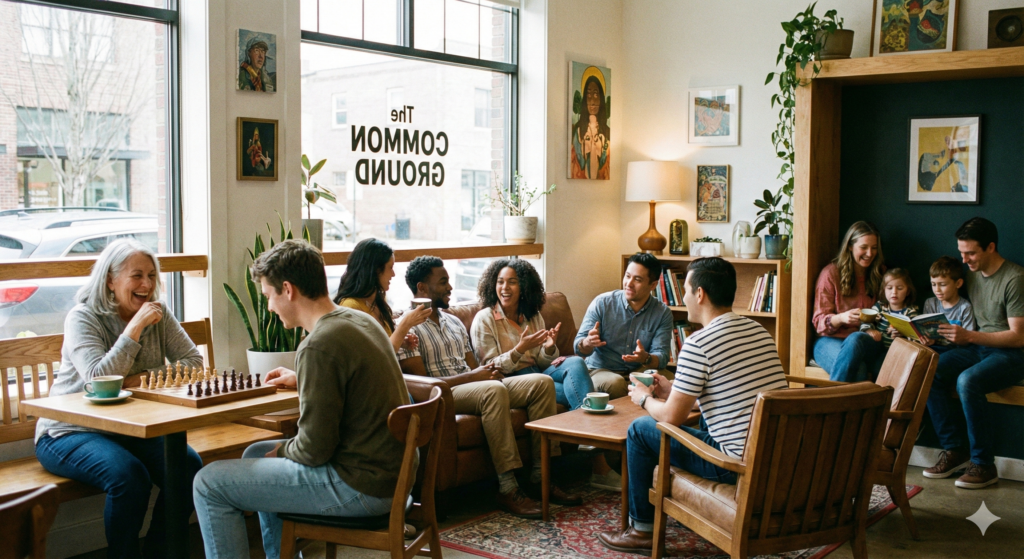
The concept of a ‘third place’ was coined by urban sociologist Ray Oldenburg in his influential 1989 book, The Great Good Place. He described these as public places that host the regular, voluntary, informal, and happily anticipated gatherings of individuals beyond the realms of home (the ‘first place’) and work (the ‘second place’).
- Neutral Ground: Free from formal obligations, where individuals can come and go as they please.
- Leveler: Open and accessible to all, regardless of status or background.
- Conversation is Key: Primary activity is often lively discussion and companionship.
- Accessibility: Physically and psychologically welcoming, often inexpensive or free.
- Regulars: Frequented by a core group who give it its character and provide a sense of belonging.
Think of classic examples: the corner coffee shop, the local pub, barber shops, community gardens, libraries, or even a specific park bench where regulars convene.
Why Are Third Places Disappearing?
The decline of these vital communal hubs is multifaceted:
- Suburbanization and Urban Sprawl: Car-centric development has replaced walkable neighborhoods with isolated residential areas, making spontaneous encounters less likely.
- Rise of the Digital Age: While beneficial in many ways, social media and online entertainment often replace face-to-face interaction, creating “pseudo-community” without the depth of real-world connection.
- Economic Pressures: Small, independent businesses that often serve as third places struggle against large chains or high rents, leading to closures.
- Remote Work Trends: While offering flexibility, the shift to remote work has further eroded incidental social contact that used to happen in offices.
- Lack of Public Funding: Decreased investment in public spaces like parks, libraries, and community centers can diminish their appeal or availability.
The Human Cost of Disconnection
The absence of third places isn’t just an aesthetic loss; it carries profound human and societal costs. Research by the CDC highlights that loneliness and social isolation are associated with serious health conditions, including heart disease, stroke, dementia, and premature death. The UK even has a Minister for Loneliness, underscoring the severity of the issue. Societal fragmentation, decreased civic engagement, and a general erosion of trust can also be traced back to a lack of shared, neutral spaces where people can simply be together.
Reclaiming Community: Your Experiential Blueprint
Ready to turn the tide? Here’s your step-by-step guide to finding and fostering the connections you crave.
Step 1: Identify Your “Why” and “What”
Building community starts with self-awareness. What kind of connection are you seeking? What are your genuine interests?
- Reflect: Take time to journal. What activities truly energize you? What values do you hold dear? Are you looking for casual acquaintances, deep friendships, or both?
- Interest Mapping: List your hobbies, passions, and curiosities. Do you love reading, hiking, board games, crafts, discussing current events, or volunteering? This “what” is your compass for finding like-minded individuals.
Step 2: Scouting and Activating Potential Third Places
Now, let’s put those interests to work and identify physical spaces.
- Local Libraries: Often overlooked, libraries are hubs for learning, events, book clubs, and free workshops.
- Independent Coffee Shops & Cafes: Seek out places that encourage lingering, offer communal tables, or host open mic nights.
- Community Centers: These are goldmines for affordable classes (yoga, art, cooking), sports leagues, and public events.
- Parks & Public Gardens: Join a “friends of the park” group, participate in community garden initiatives, or simply become a regular at a dog park.
- Co-working Spaces: Even if you work remotely, a membership can offer a sense of professional and social belonging.
- Local Events: Check local newspapers, online event listings, or notice boards for farmers’ markets, festivals, or concerts. Become a regular at places you enjoy.
How-to Engage: Don’t just visit; participate. Strike up conversations with baristas, librarians, or fellow attendees. Look for flyers, sign-up sheets, or casual invitations. Remember, consistency is key to becoming a “regular.” The 2026 Vision Board: Your Blueprint for Manifesting Health and Wealth
Step 3: Navigating the Social Landscape
Building rapport takes time and a willingness to step outside your comfort zone.
- Be a “Regular”: Show up consistently to the same places or activities. Familiarity breeds comfort and recognition.
- Practice “Small Talk”: Start with simple observations or questions related to the shared context (e.g., “This coffee is great today, isn’t it?” or “What brings you to this class?”).
- Active Listening: Show genuine interest in what others say. Ask open-ended questions that encourage more than a “yes” or “no.”
- Offer Help or a Compliment: Simple gestures can open doors to connection.
- Manage Expectations: Not every interaction will lead to a deep friendship. Focus on the positive experience of connection itself.
Step 4: Leveraging Digital for Real-World Connection
Digital tools aren’t just for isolation; they can be powerful bridges to real-world community.
- Local Online Groups: Join neighborhood Facebook groups, Nextdoor, or local subreddits to discover events, ask for recommendations, or find interest groups.
- Meetup.com: A fantastic platform for finding groups based on virtually any interest, from hiking to board games to professional networking.
- Eventbrite/Local Calendar Apps: Use these to stay informed about happenings in your area.
Pitfalls to Avoid: Ensure your online interactions translate into actual face-to-face meetups. The goal is to use digital as a launching pad, not a replacement.
Beyond the Basics: Advanced Navigation Tactics for Deeper Connection
Once you’re comfortable with the blueprint, here’s how to cultivate even richer connections.
Initiating & Sustaining Groups
Don’t wait for someone else to start. Be the catalyst!
- Start Small: Invite one or two people you’ve connected with for a coffee, a walk, or a specific activity related to your shared interest (e.g., “I’m thinking of starting a book club, would you be interested?”).
- Be Consistent: Regular meetings (weekly, bi-weekly) help solidify bonds and build anticipation.
- Delegate: As the group grows, encourage others to take turns hosting or organizing. This fosters shared ownership.
Success stories often begin with just a few committed individuals. Yoga for Digital Nomads: 3 Essential 15-Minute Flows to Erase Back Pain
Volunteering & Civic Engagement
Few things foster connection like working towards a shared purpose.
- Find Your Cause: Research local non-profits, animal shelters, environmental groups, or food banks that align with your values.
- Consistent Commitment: Regular volunteering hours allow you to build relationships with fellow volunteers and staff.
- Institutional Relevance: Local government websites, non-profit directories, and university community outreach programs are excellent places to find opportunities.
The Power of Place-Making
Support the very spaces that nurture community.
- Support Local Businesses: Frequent independent cafes, bookstores, and shops. Your patronage helps them thrive as community hubs.
- Advocate for Public Spaces: Get involved with local initiatives to improve parks, sidewalks, or community gardens. Attend town hall meetings or join neighborhood associations.
- Organize Pop-Up Events: With local approval, consider organizing small, free community events like a neighborhood clean-up, a potluck in a park, or an outdoor movie night.
Your actions can actively contribute to the social infrastructure of your area
Overcoming Common Pitfalls
Even with a blueprint, challenges arise. Here’s how to navigate them:
- Social Anxiety: Start with low-stakes interactions. Focus on others. Remember that most people are just as nervous. Small, consistent steps build confidence.
- Time Constraints: Integrate community-building into existing routines. Combine errands with a stop at a café, or choose a hobby group that fits your schedule. Quality over quantity.
- Fear of Rejection: Not everyone will click, and that’s okay. Don’t take it personally. Persistence and an open mindset will eventually lead to genuine connections.
- Lack of Obvious Options: If your immediate neighborhood lacks third places, expand your search. Consider nearby towns or online communities that facilitate in-person meetings.
Reclaiming Your Place in the World
The ‘Third Place’ Crisis is a challenge, but it is not an insurmountable one. By understanding its roots and applying an experiential, step-by-step strategic blueprint, you possess the power to actively cultivate meaningful connections and enrich your life. We’ve moved beyond simply lamenting the decline, offering ‘how-to-succeed-when-it-gets-complicated’ guidance to overcome isolation.
The journey to finding your ‘third place’ is an active one, requiring curiosity, courage, and consistency. Start by identifying your interests, scouting local spaces, and taking those crucial first steps in conversation. Remember, while the modern world often pushes us into isolation, the power to cultivate a rich, connected life lies within our proactive engagement. This isn’t just about finding a place; it’s about finding yourself within a thriving community, and that is a journey well worth taking.