
Silent Walking: Guide to Finding Calm in a Noisy World
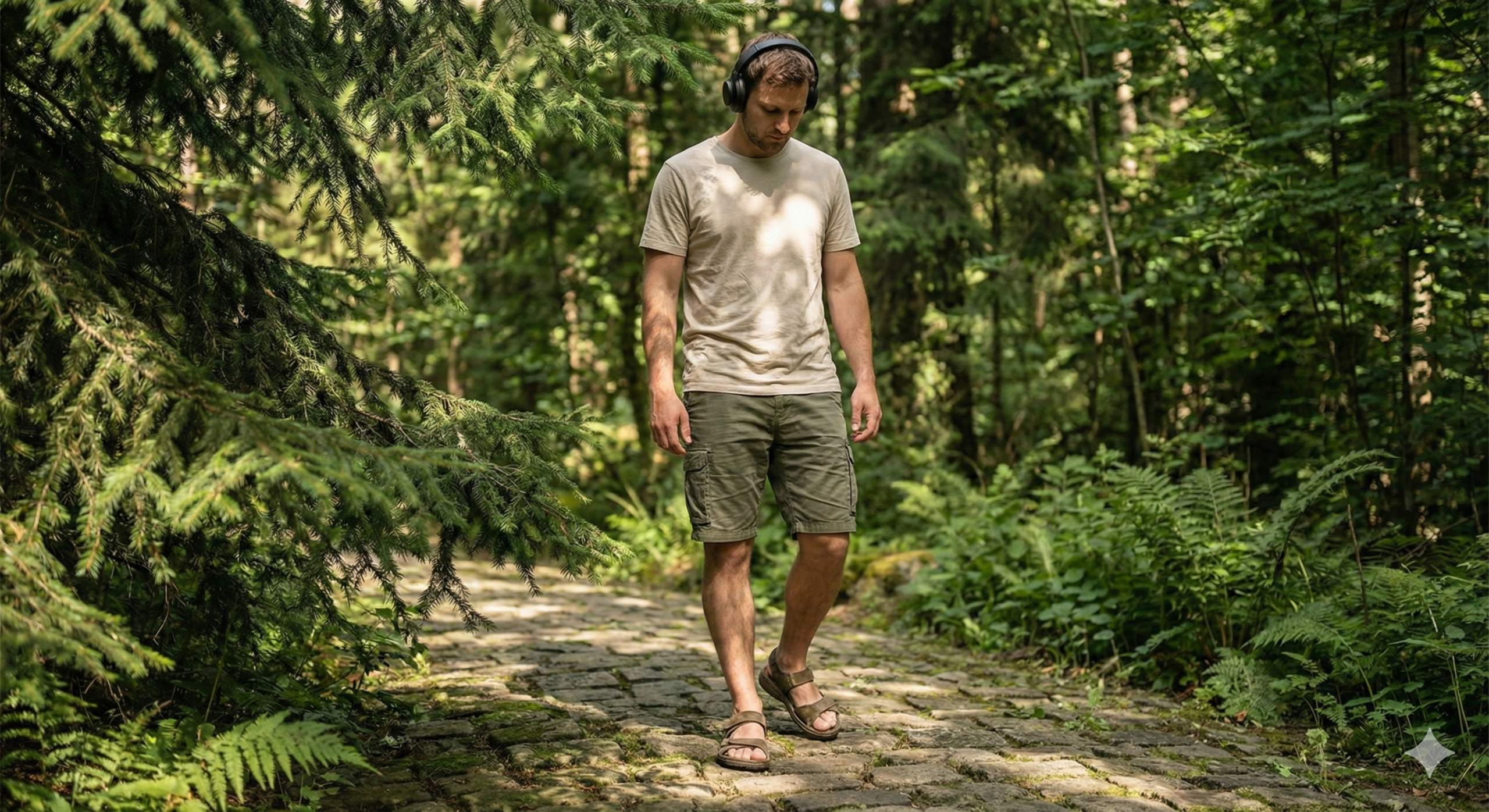
Silent Walking: Guide to Finding Calm in a Noisy World
In a world of constant connection, your daily walk might not be the peaceful escape it once was. It’s often filled with podcasts, playlists, audiobooks, and phone calls—a relentless stream of digital noise poured directly into your ears. We’ve become so accustomed to consuming content that the simple act of walking in silence can feel foreign, even intimidating. But what if that silence was the key to unlocking profound mental clarity, creativity, and calm? Welcome to the practice of silent walking.
This isn’t just another fleeting wellness trend; it’s a powerful, science-backed technique for reclaiming your mental space. It’s an antidote to the overstimulation of modern life. In this comprehensive guide, we’ll move beyond the simple definition and provide you with a practical, step-by-step framework to transform your daily stroll into a transformative mindfulness practice. Consider this your definitive resource for mastering silent walking, from your very first step to advanced techniques.
What Exactly is Silent Walking (And What It’s Not)?
At its core, silent walking is the simple act of walking without any intentional auditory distractions. No music, no podcasts, no phone conversations. But it’s the *intention* behind the silence that elevates it from a mere commute to a meditative practice. The goal isn’t to reach a destination or burn calories (though those are nice side effects); it’s to connect with your immediate environment and your inner world.
Many people’s first reaction is, “Isn’t that just… walking?” Not quite. The key differences are awareness and purpose.
- Silent Walking is Intentional: You consciously decide to leave distractions behind to be present.
- Regular Walking is often Autopilot: You might walk from point A to B while lost in thought, planning your day, or listening to something, barely noticing your surroundings.
- Silent Walking is about Sensory Immersion: It encourages you to tune into the ambient sounds of your environment—the birds, the traffic, the wind—and the physical sensations of your body in motion.
It’s not about forcing your mind to be empty. It’s about creating the space for your thoughts to come and go, without the constant need to be entertained or distracted.
The Science-Backed Benefits of Unplugged Movement
The magic of silent walking lies in its ability to combine two potent wellness practices: low-impact physical activity and mindfulness. This synergy produces a host of benefits that are supported by scientific research.
Reduces Stress and Lowers Cortisol
Walking, especially in natural environments, has been shown to significantly decrease levels of the stress hormone cortisol. When you remove the stimulating input of audio content, you allow your nervous system to shift from a state of high alert (sympathetic) to one of rest and digest (parasympathetic). This quiets the body’s stress response, leaving you feeling calmer and more centered.
Boosts Creativity and Problem-Solving
Ever had a brilliant idea pop into your head in the shower? Silent walking works on a similar principle. Neuroscientists believe it helps activate the brain’s “Default Mode Network” (DMN), which is engaged when our minds are free to wander. This state is crucial for creativity, insight, and connecting disparate ideas. By giving your brain a break from focused tasks and constant input, you create the fertile ground for your best ideas to surface.
Enhances Mindfulness and Presence
Silent walking is, in essence, a form of moving meditation. It trains your attention to focus on the present moment—the feeling of your feet on the pavement, the rhythm of your breath, the sights and sounds around you. This practice strengthens your “mindfulness muscle,” improving your ability to stay present and less reactive in all areas of your life. Stress Reduction Techniques for a Healthy Heart: Your Ultimate Guide
Your Step-by-Step Guide to the Perfect Silent Walk
Ready to try it? Don’t just leave your headphones at home. Follow this structured approach to maximize the benefits and ease into the practice.
Step 1: The Prep – Setting Your Intention
Before you even step out the door, take 30 seconds to set an intention. What do you want to get out of this walk? Your goal could be to:
- Release stress from a busy day.
- Work through a problem without actively forcing a solution.
- Simply observe the world around you with fresh eyes.
This small act of purpose frames the walk as a dedicated practice, not just an empty space in your day.
Step 2: The First 5 Minutes – Grounding and Body Scan
The beginning of the walk is for transitioning from a state of distraction to a state of presence. Use these first few minutes to perform a mental body scan. Start with your feet. Notice the sensation of your shoes connecting with the ground. Feel the muscles in your legs engage. Pay attention to the gentle swing of your arms. Notice your posture. Is your jaw clenched? Are your shoulders tense? Breathe and release.
Step 3: The Middle 10 Minutes – Engaging All Your Senses
Now, expand your awareness outward. A great technique for this is the 5-4-3-2-1 method:
- Acknowledge 5 things you can see: The texture of a leaf, the color of a door, a crack in the sidewalk, the shape of a cloud.
- Acknowledge 4 things you can feel: The breeze on your skin, the fabric of your clothes, the warmth of the sun, the keys in your pocket.
- Acknowledge 3 things you can hear: A distant siren, birds chirping, the hum of traffic. Don’t label them as ‘good’ or ‘bad’ sounds, just notice them.
- Acknowledge 2 things you can smell: Fresh-cut grass, car exhaust, rain in the air.
- Acknowledge 1 thing you can taste: The lingering coffee from this morning, or simply the neutral taste in your mouth.
This structured exercise prevents your mind from getting lost and anchors you firmly in the present moment.
Overcoming Common Silent Walking Hurdles
The path to silent walking isn’t always smooth. Here’s how to navigate the most common roadblocks.
“I’m bored! My mind won’t stop racing.”
This is the most common challenge, and it’s completely normal. Your brain is used to constant stimulation. When you take it away, it can feel restless. Instead of fighting it, reframe it. Acknowledge the thought (“There’s that feeling of boredom”) and gently guide your attention back to your senses. The 5-4-3-2-1 method is your best tool here. Remember, the goal isn’t an empty mind, but a present one.
“I feel anxious or unsafe without my phone/headphones.”
Headphones can feel like a social shield or a safety blanket. Start small. Commit to a 5-minute silent walk on a familiar, well-lit street. As you build comfort, you can extend the duration and explore new routes. The increased situational awareness you gain from being unplugged can actually make you feel safer over time.
“I live in a loud city. It’s not peaceful.”
Mindfulness isn’t about finding a perfect, silent environment; it’s about accepting the environment you’re in without judgment. An urban silent walk offers a different kind of richness. Treat the city’s “soundscape” as your object of meditation. Notice the layers of sound—the rumble of a subway, the mix of languages, the squeak of brakes—as a unique urban symphony. Beyond Willpower: How to Create a Dopamine Menu and Tame Food Noise
Taking Your Practice to the Next Level
Once you’re comfortable with the basics, you can deepen your practice with these advanced techniques.
Try Themed Walks
Dedicate an entire walk to a single sense. On a “sound walk,” your only goal is to notice every auditory detail. On a “color walk,” actively look for every shade of a specific color, like green or blue. This sharpens your focus and reveals new layers in familiar surroundings.
The “Problem-Solving” Walk
If you’re stuck on a creative or professional challenge, frame the question clearly in your mind before you leave. Then, for the entire walk, consciously release it. Don’t try to solve it. Just walk, observe, and let your subconscious do the work. You might be surprised when a solution appears effortlessly as you round a corner.
Integrate with Journaling
Keep a notebook handy for when you return. Spend five minutes free-writing about what you noticed, what thoughts arose, or any insights you had during your walk. This helps solidify the mental benefits and track your progress over time
Your Journey to a Quieter Mind Begins with a Single Step
Silent walking is more than a trend; it’s a simple, free, and profoundly effective tool for navigating our noisy, overstimulated world. It’s a declaration that you deserve a few minutes of unfiltered reality each day—a space to think, to feel, to observe, and simply to be.
So on your next walk, we challenge you to do one thing: leave the headphones behind. Take that first silent step. You might just discover that the most interesting soundtrack of all is the world happening right in front of you.