
Beyond Willpower: How to Create a Dopamine Menu and Tame Food Noise
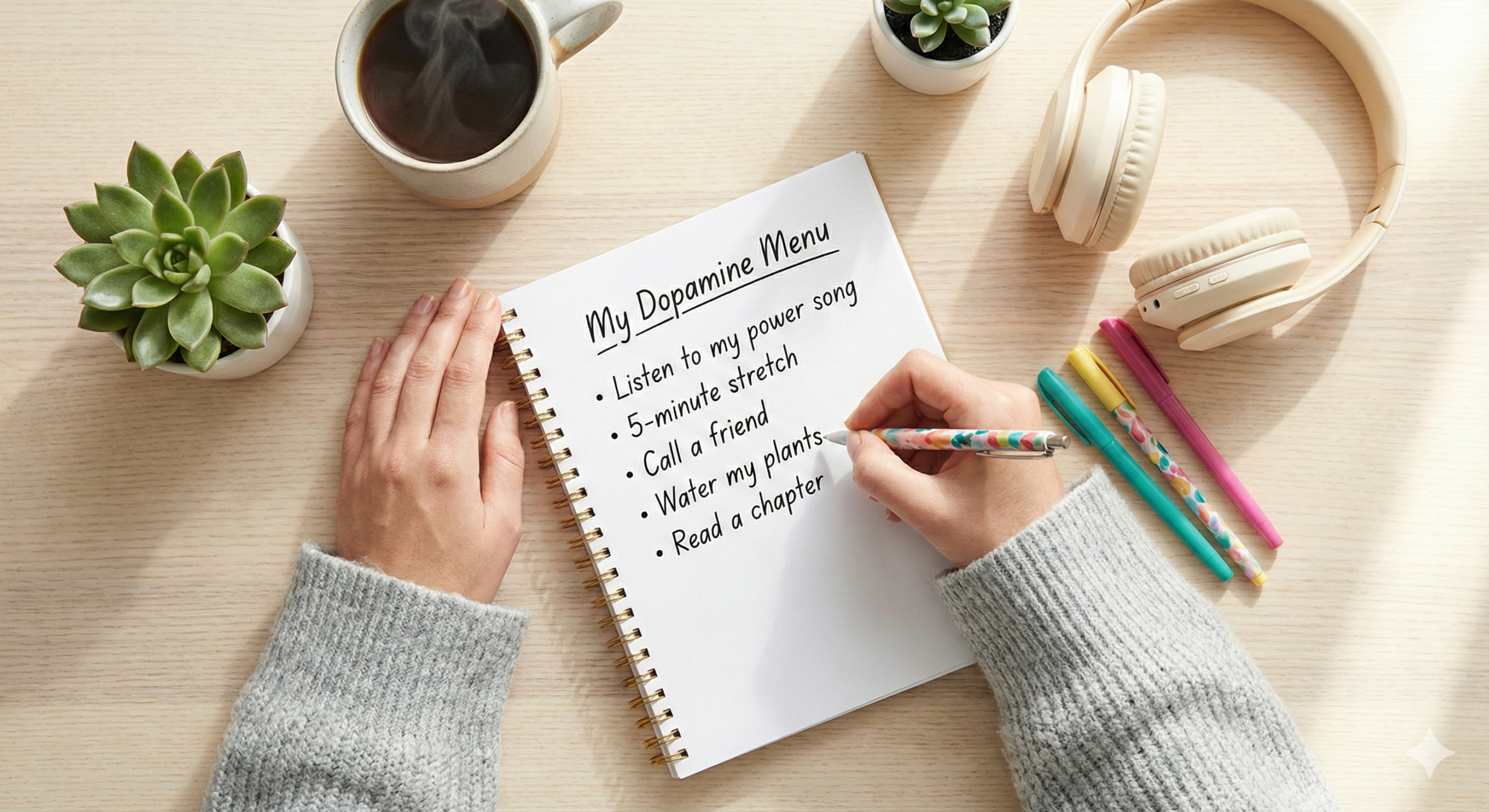
How to Create a Dopamine Menu
It’s a familiar scene for many. You’re standing in the kitchen, the empty container of ice cream or bag of chips in your hand, and a wave of shame washes over you. The internal monologue begins: “Why did I do that again? I have no self-control.” This cycle of impulsive eating followed by guilt is exhausting, and for individuals with ADHD, it’s often a daily battle. You’ve likely tried every conventional diet tip, only to feel like a failure when they don’t work. Here’s the truth: it’s not a lack of willpower. It’s a brain-based challenge called “Food Noise.”
Most articles will tell you how to prevent these moments. They’ll list strategies and tips as if it’s a simple checklist. But they miss the most critical part of the experience: what do you do in the moments *after* the Food Noise wins? What happens when your best-laid plans crumble under the weight of executive dysfunction or emotional overwhelm? Instead of just giving you another list of preventative measures destined to fail under pressure, this guide introduces the “Food Noise Compassionate Reset.” It’s a practical, in-the-moment framework for short-circuiting the shame spiral, understanding your brain’s needs, and regaining control with kindness, not criticism.
Understanding the Static: What is Food Noise and Why is it Louder with ADHD?
Before we can quiet the noise, we have to understand where it’s coming from. Food Noise isn’t just hunger; it’s a constant, intrusive internal chatter about food. It’s the relentless debate about what to eat next, the craving for a specific snack, the guilt over what you just ate, and the mental energy spent resisting urges. It’s distracting, overwhelming, and utterly draining.
The Dopamine Connection: Your Brain on a Reward Hunt
At the heart of ADHD is a difference in the brain’s dopamine system. Dopamine is a neurotransmitter linked to motivation, focus, and reward. An ADHD brain often has lower baseline levels of dopamine, which means it’s constantly seeking out activities that provide a quick boost.
Food—especially items high in sugar, fat, and salt—is one of the fastest, most reliable sources of dopamine available. “When an ADHD brain feels under-stimulated or overwhelmed, it instinctively searches for a quick fix,” explains Dr. Amelia Vance, a clinical psychologist specializing in neurodevelopmental disorders. “Food provides an immediate, potent dopamine hit that temporarily soothes the brain’s craving for stimulation. This isn’t a moral failing; it’s a neurobiological drive.” In fact, research published in the Journal of Eating Disorders has shown that adults with ADHD have a significantly higher prevalence of binge eating disorder, highlighting this powerful biological link.
Executive Dysfunction and Impulsivity
Dopamine isn’t the only culprit. Core ADHD traits pour gasoline on the fire:
- Executive Dysfunction: This impacts planning, organization, and task initiation. The mental effort required to plan, shop for, and cook a balanced meal can feel monumental, making it easier to grab the quickest, most rewarding option available.
- Impulsivity: This is the difficulty in pausing between an urge and an action. When a craving hits, the ADHD brain struggles to hit the brakes and consider the long-term consequences, leading to impulsive eating.
- Emotional Dysregulation: Heightened emotional responses mean that feelings like stress, boredom, or sadness can be incredibly intense. Food becomes a tool for emotional regulation—a way to numb, distract, or comfort in the face of overwhelming feelings.
The Proactive Strategy: Building Your Personalized Dopamine Menu
Since we know the brain is hunting for dopamine, our best proactive strategy is to give it what it wants—just not always with food. Enter the Dopamine Menu: a personalized, written list of non-food activities that provide stimulation, satisfaction, and reward. It’s your go-to toolkit when you feel the Food Noise starting to build.
How to Create Your Dopamine Menu: A Step-by-Step Guide
The key is to make this menu as easy to use as possible, especially in moments of low motivation.
- Brainstorm by Time & Energy Level: Don’t just list things you “should” do. Categorize activities by the effort they require.
- Snack-Sized Hits (Under 5 minutes): Quick, easy boosts.
- Appetizers (5-15 minutes): A bit more involved but still manageable.
- Main Courses (15+ minutes): Activities for when you have more time and energy.
- Fill Your Menu with Variety: Aim for at least 15-20 options that appeal to different senses and needs. Here are some ideas to get you started:
- Quick Hits: Listen to your favorite high-energy song, do 20 jumping jacks, watch a funny 1-minute video, solve a Wordle puzzle, stretch your arms to the ceiling, step outside and take three deep breaths.
- Mindful Breaks: Doodle in a notebook for 10 minutes, play a round of a mobile game, listen to a short podcast episode, tidy one small surface (like your desk), text a friend a meme.
- Engaging Activities: Go for a brisk walk around the block, work on a creative hobby (knitting, painting), organize a single drawer, call a family member, follow a 15-minute yoga video. How to Build a Morning Routine That Doesn’t Start with Your Phone: Reclaiming Your Day for True Well-being
- Make It Visible: An out-of-sight menu is a useless menu. The effects of executive dysfunction are real. Put your Dopamine Menu where you will see it when you need it most—on the refrigerator, taped to your computer monitor, or as the lock screen on your phone.
The Game-Changer: Your Food Noise Compassionate Reset
Here is the crucial part that most advice ignores. You will have moments where you don’t use your menu. You’ll eat impulsively. You’ll binge. That is okay. The goal is not perfection; it’s to shorten the shame spiral and get back on track with kindness. When it happens, activate your Compassionate Reset.
Step 1: Pause and Name It (Without Judgment)
The moment you recognize what’s happened, take a breath. Your instinct will be to flood your mind with criticism. Intercept it. Instead of “I’m such a failure,” gently state the fact: “I was feeling overwhelmed and I used food to cope.” This small shift in language separates your identity from your action. You are not a failure; you are a person who performed an action.
Step 2: Engage in a Gentle Physical Reset
Do one small, kind thing for your body to break the cycle. This is not a punishment or a workout to “burn it off.” It’s a signal to your nervous system that you are shifting gears.
- Drink a large glass of cool water.
- Go outside for 60 seconds of fresh air.
- Gently stretch your neck and shoulders.
- Wash your hands and face with cool water.
Step 3: Consult Your Dopamine Menu (Post-Facto)
Now, look at your Dopamine Menu. Ask yourself: “What need was I trying to meet with food just now?” Was it boredom? Stress? A need for sensory input? A craving for comfort? Find one small, easy activity from your menu that can help meet that *underlying* need now. This reframes the menu as a recovery tool, not just a prevention tool.
Step 4: Plan the Next Small Success
Do not spiral into thinking about how you’ll “eat perfectly forever” starting tomorrow. That’s an executive function nightmare. Bring your focus to the immediate future. What is your *very next* meal or snack? Plan just that one thing. “For lunch, I will have a turkey sandwich and an apple.” This makes moving forward feel achievable, not overwhelming. The 5 Best Vegan Collagen Boosters: Your Protocol for Glowing Skin
Building a Supportive Ecosystem
The Dopamine Menu and Compassionate Reset are powerful tools, but they work best as part of a larger, supportive system.
- Nourish Your Brain: Prioritize protein at every meal to help stabilize blood sugar and dopamine levels. Don’t skip meals, as this can lead to intense cravings and bingeing later.
- Consider Professional Help: You don’t have to do this alone. A registered dietitian who specializes in ADHD can help you create eating strategies that work *with* your brain. Therapists, especially those trained in Cognitive Behavioral Therapy (CBT), can help you build coping mechanisms. And for many, ADHD medication is life-changing in its ability to quiet food noise by regulating dopamine at the source.
Ultimately, managing your relationship with food when you have ADHD is a journey of self-discovery and self-compassion. It’s about letting go of the all-or-nothing thinking and embracing a new goal: not perfection, but progress. Your brain is not broken; it just needs a different set of tools. With a Dopamine Menu in your proactive toolkit and the Compassionate Reset as your guide for the tough moments, you can finally turn down the volume on Food Noise and find a more peaceful way of eating, and living.