
Fitness for Fertility: A Real-World Guide to Cycle Syncing Workouts When Your Hormones Don’t Follow the Rules
Fitness for Fertility: A Real-World Guide to Cycle Syncing Workouts
You’ve seen the ads and read the articles. The promise of cycle syncing workouts, powered by sleek at-home hormone monitoring, seems like the key to unlocking your body’s potential. The marketing shows a perfect, color-coded chart: a gentle rise in estrogen, a sharp, decisive LH peak, and a beautiful, sustained progesterone curve. It’s clean, predictable, and inspiring.
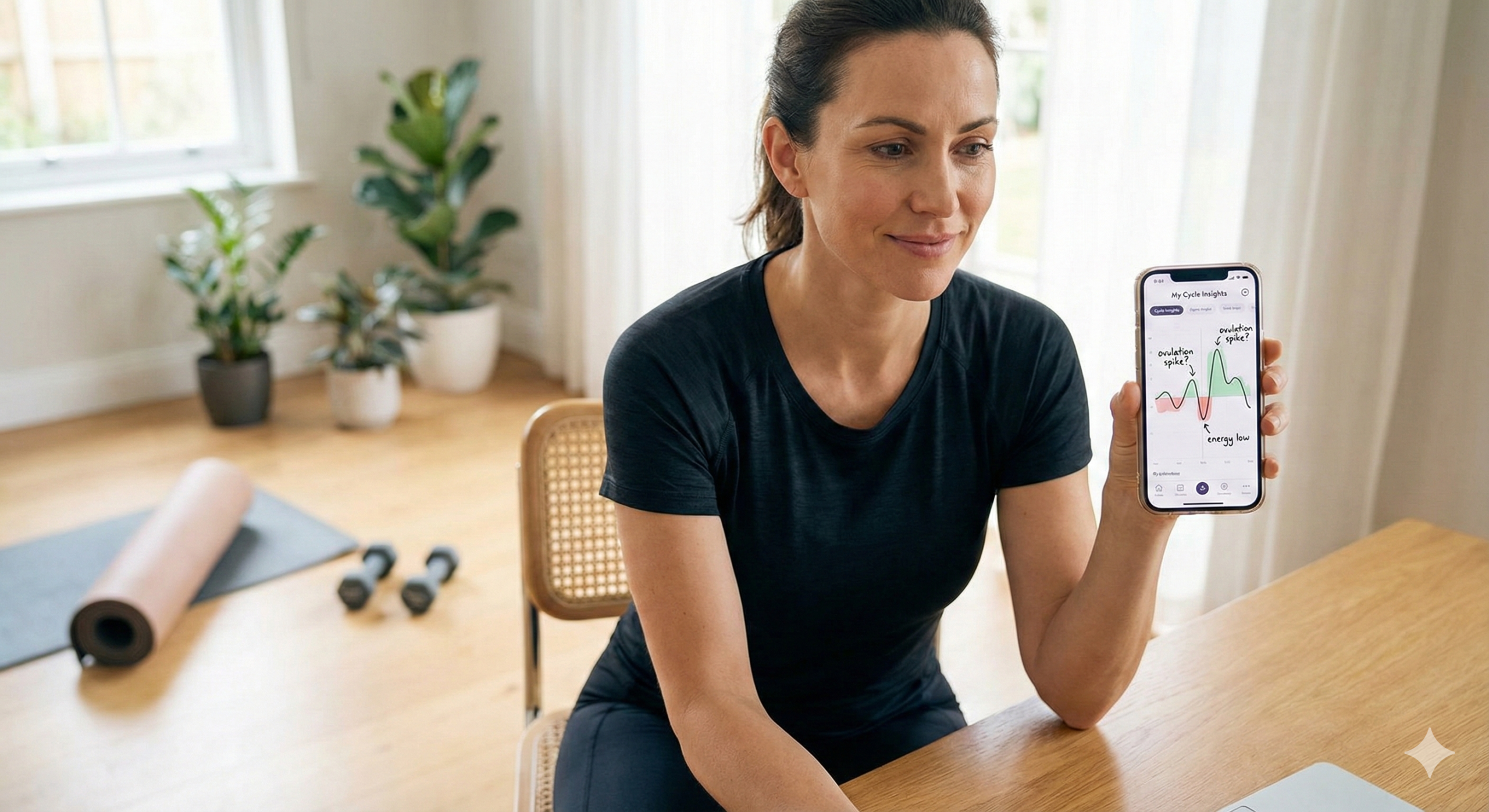
But what happens when you pee on the stick and your chart looks nothing like the one on the box? What do you do when your LH surge is a confusing blip, not a clear peak? Or when your progesterone creeps up sluggishly instead of soaring with confidence? For many women on a fertility or perimenopause journey, this is the moment of panic. The moment the clean promise of data meets the messy reality of their own unique biology.
This is not just another article explaining the four phases of your cycle. While competitors show you the idealized ‘textbook’ hormone chart, this is your definitive troubleshooting guide for the real-world data that creates anxiety. We’ll address what to do when your results show ambiguous peaks, weak rises, or the chaotic fluctuations of a perimenopausal cycle, and how you can still use the principles of cycle syncing to support your body, build resilience, and advocate for your health.
The Cycle Syncing Promise: Understanding the “Textbook” Four Phases
Before we dive into the messy realities, let’s establish the foundation. Cycle syncing is the practice of tailoring your fitness, nutrition, and even work schedule to the hormonal fluctuations of your menstrual cycle. The goal is to work *with* your body’s natural rhythms, not against them. A typical 28-day cycle is divided into four distinct phases, each with a unique hormonal profile that makes certain types of exercise more effective and beneficial.
The Menstrual Phase (Approx. Days 1-5): Rest and Recovery
This is the start of your cycle, when your period begins. Both estrogen and progesterone are at their lowest levels, which can leave you feeling tired and withdrawn. This is not the time to push for a personal best.
- Hormones at Play: Low Estrogen, Low Progesterone.
- Workout Focus: Honor your need for rest. Think gentle, restorative movement like yin yoga, stretching, and leisurely walks. The focus is on recovery and reducing inflammation.
The Follicular Phase (Approx. Days 6-13): Building Energy
After your period ends, your pituitary gland releases Follicle-Stimulating Hormone (FSH), telling your ovaries to prepare an egg. This causes estrogen levels to begin a steady climb, boosting your energy, mood, and brainpower.
- Hormones at Play: Estrogen (measured as its metabolite, E3G) begins to rise.
- Workout Focus: As energy returns, reintroduce more dynamic movement. This is a great time for brisk walks, light runs, hiking, and flow-style yoga. Your body is building towards its peak.
The Ovulatory Phase (Approx. Days 14-16): Peak Performance
This is the main event for those on a fertility tracking journey. Your rising estrogen hits a peak, triggering a surge of Luteinizing Hormone (LH). This LH surge is the hormonal trigger that tells your ovary to release a mature egg. You’re at your strongest and most energetic.
- Hormones at Play: Estrogen (E3G) peaks, Luteinizing Hormone (LH) surges.
- Workout Focus: Go for it! Your body is primed for high-intensity exercise. This is the perfect window for HIIT, spin classes, heavy strength training, and challenging runs.
The Luteal Phase (Approx. Days 17-28): Powering Down
After ovulation, the ruptured follicle transforms into the corpus luteum, which begins producing progesterone. Progesterone (measured as its metabolite, PdG) rises to prepare the uterine lining for a potential pregnancy. Your basal body temperature rises, and energy levels begin to wane, especially in the latter half of this phase.
- Hormones at Play: Progesterone (PdG) rises and becomes dominant. Estrogen takes a backseat.
- Workout Focus: Shift from high-intensity back to foundational strength. Focus on Pilates, bodyweight exercises, and moderate cardio like swimming or jogging. As you near your period, transition back to more restorative movements.
When Reality Hits: Your Troubleshooting Guide to “Messy” Hormone Data
The textbook cycle is a great guide, but it’s not every woman’s reality. An at-home hormone monitoring kit can be an incredible tool, but interpreting hormone results that deviate from the norm can be stressful. Let’s tackle the most common scenarios.
Scenario 1: The Ambiguous LH Peak
The Problem: You’ve been testing daily, but instead of a single, dark line signaling an LH surge, you see a few days of “almost positive” results, or a peak that seems weak. You’re left wondering, “Did I even ovulate?”
The Reality & The Action:
- It’s Normal: Research published in journals like *Fertility and Sterility* shows that LH surge patterns vary significantly among women. Some have a rapid onset and offset (a true “peak”), while others have a more gradual plateau or a multi-day surge. Hydration can also dilute urine and affect test results.
- Look for the Trend: The key isn’t necessarily one perfect line, but the overall shift. If you see a clear rise from your baseline, even if it’s not a “dye-stealer,” that’s your cue. Trust the trend over a single test.
- Cycle Syncing Fix: When you see your LH start to rise, lean into your ovulatory phase workouts. Don’t wait for a textbook peak. Use that rising energy for a great HIIT or strength session. This is a perfect example of *interpreting hormone results* to take action, not waiting for perfection.
Scenario 2: The Slow or Weak Progesterone Rise
The Problem: Your *fertility hormone kit* confirmed ovulation with an LH surge, but your PdG levels in the days that follow are creeping up slowly, or seem low. You start worrying about a “weak” luteal phase.
The Reality & The Action:
- Sustain is Key: According to Dr. Amy Beckley, founder of a leading hormone testing company, “Confirming ovulation requires a sustained rise in PdG over several days. A single low number isn’t a cause for panic; it’s the pattern that provides the most insight.” Your goal is to see PdG rise and stay elevated for at least 7-10 days.
- Manage Your Cortisol: The luteal phase is progesterone’s time to shine. High-impact, high-stress exercise can increase cortisol, your stress hormone, which can sometimes compete with progesterone production.
- Cycle Syncing Fix: If your *quantitative hormone reports* show a sluggish PdG rise, this is a clear signal to prioritize stress-reducing workouts. Shift to restorative yoga, long walks in nature, and Pilates. Focus on sleep and recovery. This supports your body’s ability to produce the progesterone it needs.
Scenario 3: The Chaotic Fluctuations of Perimenopause
The Problem: Your cycles are unpredictable—some long, some short. Your energy is all over the place, and your hormone chart looks like a rollercoaster. You’re experiencing *perimenopause symptoms* and feel like cycle syncing is impossible.
The Reality & The Action:
- Embrace the Data: Perimenopause, as defined by The American College of Obstetricians and Gynecologists (ACOG), is characterized by these very *hormone fluctuations*. A *perimenopause hormone test* can be invaluable, not to predict a perfect cycle, but to validate your experience and provide data to share with your doctor.
- Sync to Your Energy, Not a Calendar: Ditch the idea of a 28-day schedule. Use your daily hormone data as a guide for your daily energy. On days when estrogen is higher and you feel great, do a more intense workout. On low-hormone, low-energy days, opt for a walk or stretching. The data empowers you to honor your body’s needs day-by-day.
From Data to Doctor: Advocating for Your Reproductive Health
Your at-home hormone monitoring data is a powerful tool, but it’s not a diagnosis. The ultimate goal is to use this information to have more informed conversations with your healthcare provider. Bring 2-3 cycles of your charts to your appointment. Instead of saying “I feel off,” you can say, “I’ve noticed my PdG levels struggle to remain elevated post-ovulation. Could we discuss my luteal phase health?” This transforms you from a passive patient into an active, informed advocate for your own *reproductive health*.
Use *medically-backed resources* from trusted authorities like the Cleveland Clinic and WebMD to learn more, but always partner with your doctor to create a plan. Fitness for Fertility: How Cycle Syncing Workouts is Your Action Plan for Hormone Health
Conclusion: Your Body is Not a Textbook
The journey to understand your hormones isn’t about achieving a perfect, color-coded chart. It’s about gaining a deeper, more compassionate understanding of your own unique, complex, and powerful body. Messy data isn’t a sign of failure; it’s an invitation to listen more closely and respond more intuitively.
Use the principles of cycle syncing as a flexible framework, not a rigid rulebook. Let your hormone data be the guide that helps you choose the right workout, advocate for your health, and reclaim a sense of agency on your path to fertility or through the transition of perimenopause. Because the ultimate goal isn’t a perfect chart—it’s a healthier, more empowered you.