
Hot Yoga vs. Infrared Yoga: Which Heated Practice Is Right for You?
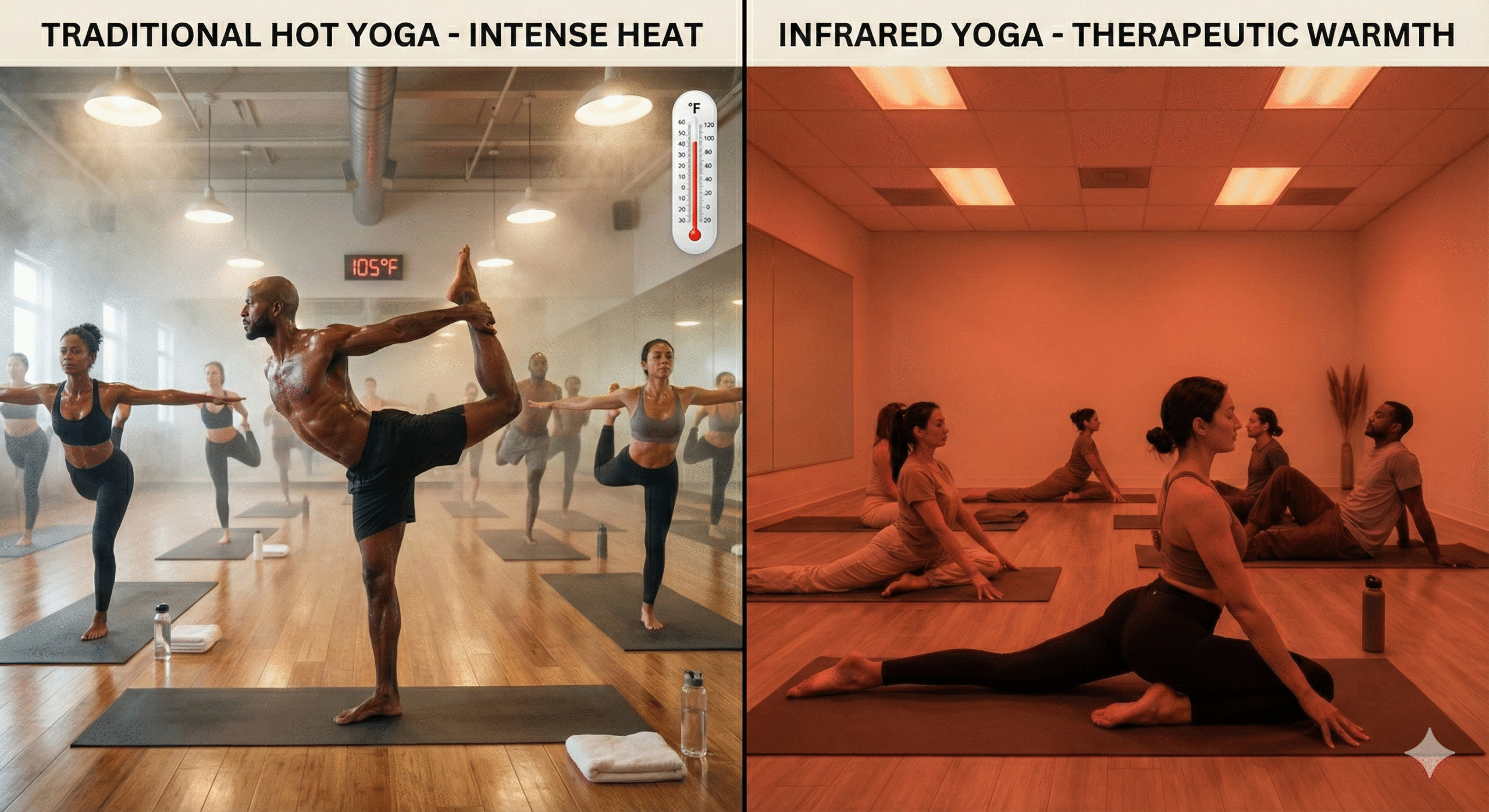
Hot Yoga vs. Infrared Yoga
Stepping into a heated yoga studio for the first time is a full-sensory experience. The wave of warmth, the immediate feeling of loosened muscles, the promise of a deep, detoxifying sweat—it’s an allure that has captivated wellness enthusiasts for decades. But as you browse local studio schedules, you’ll notice two dominant terms: “Hot Yoga” and “Infrared Yoga.”
Are they the same? Not at all. While both promise a sweaty, challenging practice, the way they generate heat creates two fundamentally different experiences with unique benefits and considerations. Choosing the right one can be the key to unlocking a practice you’ll love and stick with.
At LifestyleCart, we’re dedicated to helping you navigate your wellness journey. This comprehensive guide will break down the science, the feeling, and the specific benefits of Hot Yoga vs. Infrared Yoga, empowering you to decide which heated practice will best serve your body and mind.
What is Traditional Hot Yoga? The Convection-Heated Classic
When most people think of “hot yoga,” they’re usually picturing the traditional style, most famously represented by Bikram Yoga. In this method, the entire room is heated using forced-air systems, similar to a conventional furnace. This is called convection heating.
How It Works and How It Feels
Traditional hot yoga studios heat the air around you to temperatures typically between 95°F and 105°F (35°C to 40°C), with humidity levels often cranked up to 40% or higher. The experience is immersive and intense. You’re breathing hot, humid air, which makes the practice feel like you’re in a tropical climate. The sweat is immediate and profuse because your body is working hard to cool itself down in a super-heated, sauna-like environment.
- Heat Source: Convection (forced air heating systems).
- Atmosphere: High heat and high humidity.
- Key Sensation: An enveloping, steamy heat that challenges your cardiovascular system.
What is Infrared Yoga? The Radiant Heat Revolution
Infrared yoga is a more modern approach that uses a completely different technology. Instead of heating the air, studios use special infrared heaters that emit radiant heat. This is the same type of heat you feel from the sun, but without the harmful UV rays.
How It Works and How It Feels
Infrared waves heat objects and bodies directly, not the air in between. This means the heat penetrates your skin and muscles more deeply at a lower ambient temperature. Studios are often set to a more comfortable 80°F to 95°F (27°C to 35°C) with much lower humidity. The result is a powerful, detoxifying sweat that comes from your body heating up from the inside out, rather than from the hot air around you. The warmth feels therapeutic and less suffocating for many practitioners.
- Heat Source: Radiant (far-infrared panels).
- Atmosphere: Moderate to high heat with low humidity.
- Key Sensation: A deep, penetrating warmth that feels like sun on your skin.
Head-to-Head Comparison: Key Differences at a Glance
To truly understand the choice before you, let’s put these two practices side-by-side. While both will increase your flexibility and make you sweat, the nuances are what matter.
The Heat Source: Ambient Air vs. Radiant Waves
This is the single biggest differentiator. Traditional hot yoga heats the room, creating a hot bubble of air you move through. Infrared yoga heats you directly. Think of it like this: hot yoga is like being in a steam room, while infrared yoga is like basking in the sun.
Temperature and Atmosphere: The Sweat Factor
While you’ll sweat buckets in both, the *why* is different. In a 105°F humid room, much of your sweat is your body’s attempt to cool its surface temperature. In an infrared studio, the sweat is often described as feeling “deeper,” a result of your core temperature rising from the radiant heat. Many find the lower humidity of infrared yoga makes breathing easier during strenuous postures.
Health Benefits: Where They Overlap and Diverge
Both practices offer incredible benefits, but their heating methods give them unique strengths.
- Cardiovascular Intensity: Traditional hot yoga often provides a more intense cardiovascular workout due to the high heat and humidity, which forces your heart to pump harder to cool the body.
- Detoxification: Both induce sweat, the body’s primary detox pathway. However, proponents of infrared heat claim it promotes a deeper detox at the cellular level by raising the core body temperature more efficiently.
- Muscle & Joint Relief: This is where infrared shines. The deeply penetrating waves can increase circulation and help soothe sore muscles and stiff joints more effectively, making it a favorite for athletes or those with chronic pain.
- Flexibility: Both methods warm the muscles, allowing for deeper, safer stretches. This is a shared, primary benefit of any heated practice.
Potential Risks and Safety Considerations
Any heated exercise requires caution. Dehydration, dizziness, and heat exhaustion are risks in both settings. However, the extreme heat and humidity of traditional hot yoga can be more challenging for individuals with respiratory issues (like asthma) or cardiovascular conditions. It’s crucial to listen to your body, hydrate relentlessly, and never push past your limits.
Which One Should You Choose? A Guide for Every Yogi
The best practice is the one you’ll do consistently. Your personal preference is paramount, but here’s a simple framework to guide your decision.
Choose Traditional Hot Yoga If…
- You crave an intense, bootcamp-style workout and want to push your physical limits.
- You love the feeling of a hot, steamy, tropical environment.
- Your primary goal is a major cardiovascular challenge and calorie burn.
- You are an experienced practitioner who is comfortable in extreme heat.
Choose Infrared Yoga If…
- You are new to heated yoga or sensitive to extreme temperatures and humidity.
- You have respiratory concerns or find it hard to breathe in humid conditions.
- Your primary goal is deep muscle relaxation, pain relief, and enhanced flexibility.
- You want the detoxifying benefits of heat in a more therapeutic and less intense-feeling environment.
Frequently Asked Questions (FAQ)
Is infrared yoga safer than hot yoga?
Neither is inherently unsafe if practiced correctly. However, the lower ambient temperature and humidity of infrared yoga can make it a more accessible and comfortable entry point for beginners or those with certain health conditions. Always consult your doctor before starting any new, strenuous exercise regimen.
Can you lose weight with hot yoga or infrared yoga?
Yes. Both practices burn a significant number of calories. While you’ll lose a lot of water weight immediately, consistent practice as part of a healthy lifestyle can contribute to sustainable weight management by building lean muscle and boosting metabolism.
What should I bring to a heated yoga class?
Hydration is non-negotiable. Bring a large water bottle. You’ll also need a high-quality, non-slip yoga mat and a towel to place over your mat (or a dedicated yoga towel). Wear light, moisture-wicking clothing that you can move in comfortably. Unrolling the Perfect Practice: Your Ultimate Guide to Yoga Mat and Accessories
The Final Verdict: Your Practice, Your Choice
Ultimately, the debate of Hot Yoga vs. Infrared Yoga isn’t about which one is superior overall, but which one is superior *for you*. One yogi’s perfect, steamy challenge is another’s therapeutic, radiant sanctuary.
The best advice? If you can, try both. Visit a traditional hot yoga studio and feel the powerful, enveloping heat. Then, book a class at an infrared studio and experience the deep, penetrating warmth. Pay attention to how your body feels during and after each practice. Listen to your breath, honor your energy levels, and choose the path that makes you feel strong, centered, and excited to roll out your mat again.