
Lab-Grown Meat in US Supermarkets by 2026? The Leader’s Guide to the Food Revolution
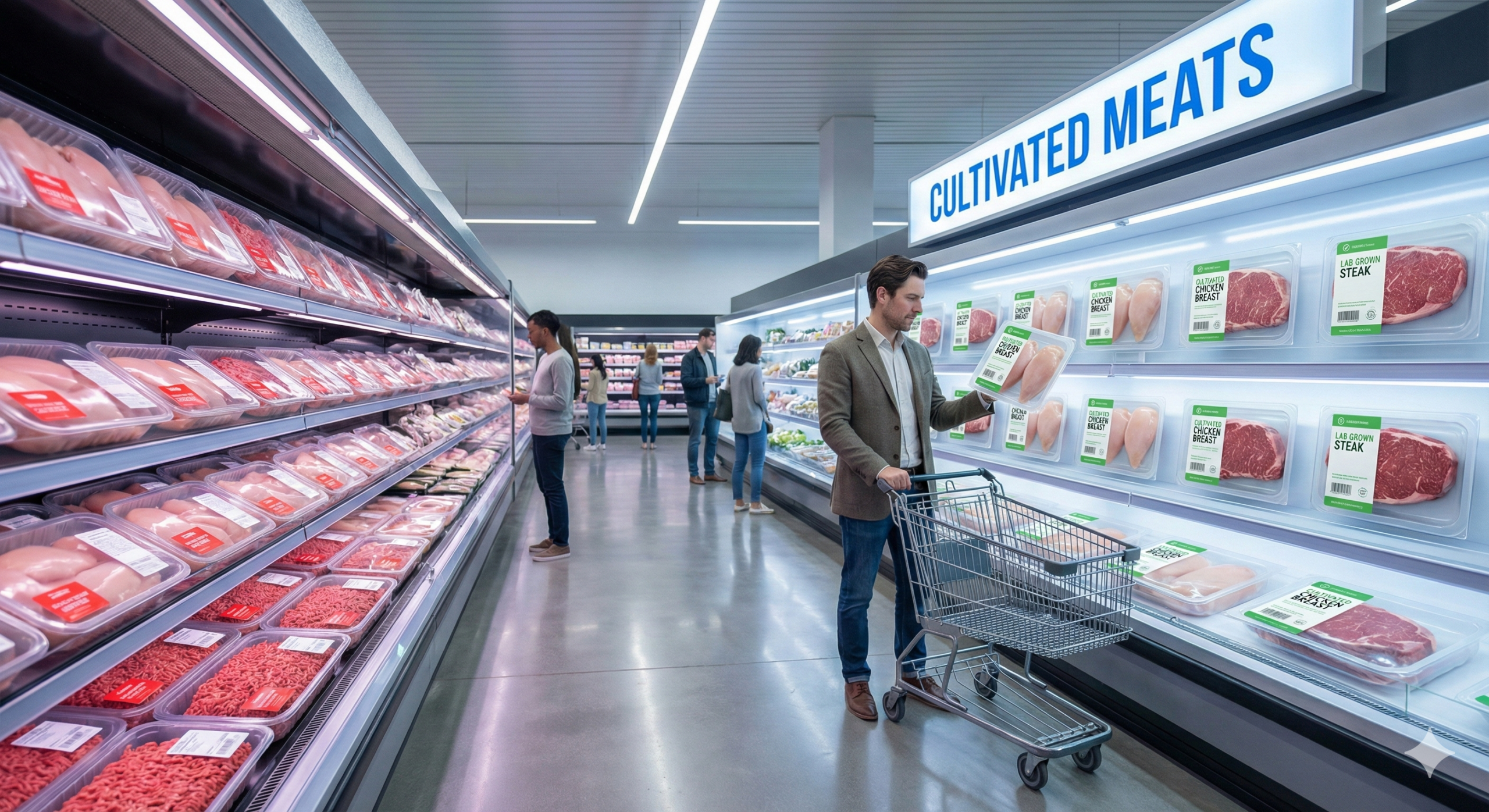
Lab-Grown Meat in US Supermarkets by 2026
Food industry leaders are staring down a familiar, agonizing decision. On one hand, relentless inflation demands cheaper suppliers and leaner operations. On the other, the triple threat of supply chain fragility, ESG mandates, and evolving consumer values demands investment in resilient, sustainable solutions. It’s a high-stakes balancing act where every choice feels like a compromise. While most industry analysis presents these challenges as separate headlines, they collide in the real world—on your desk, in a single, critical decision.
Nowhere is this collision more apparent than in the race to bring cultivated meat to the mainstream. The question isn’t just *if* lab-grown (or “cultivated”) meat will finally hit US supermarket shelves by 2026, but *how* leaders can navigate the cross-currents of economics, technology, and consumer trust to make it happen. This isn’t just another trend report; this is an integrated decision-making playbook for the next era of food.
The Cultivated Meat Revolution: More Than Just Food Tech
Before we can map the path to retail, we must understand what we’re charting. Cultivated meat is not a plant-based alternative; it’s genuine animal meat, grown from cells in a controlled environment called a cultivator, similar to the fermentors used for brewing beer. This process sidesteps traditional agriculture, offering a powerful solution to several of the industry’s most pressing challenges.
- ESG & Sustainability: The environmental pitch is compelling. A 2023 study from the Good Food Institute highlights that cultivated meat could reduce the climate impact of meat production by up to 92% and use 95% less land. For companies facing intense pressure to report on and improve their ESG metrics, this technology offers a tangible path forward.
- Health & Wellness: Grown in a sterile environment, cultivated meat can be produced without antibiotics or hormones. It also eliminates the risk of contamination from pathogens like E. coli or Salmonella, directly addressing a core consumer demand for cleaner, safer food.
- Food Tech Innovation: This represents a quantum leap in food manufacturing, blending biotechnology with culinary science. It’s the pinnacle of Food Tech investment, promising a future where food production is more predictable, efficient, and resilient.
However, this promising future must first pass through the gauntlet of today’s harsh economic realities. The journey to 2026 is paved with difficult decisions where these long-term benefits clash with short-term financial pressures.
Navigating the Headwinds: The Economic Gauntlet to 2026
The USDA and FDA gave their landmark approvals to UPSIDE Foods and GOOD Meat in 2023, clearing a path for sale in the US. But regulatory approval is just one milestone in a marathon. The true hurdles are economic and operational, forcing leaders to make tough calls.
The Inflationary Squeeze vs. The Price of Progress
The single biggest barrier to mass adoption is cost. Currently, producing cultivated meat is exponentially more expensive than conventional farming. The growth medium alone—the nutrient-rich broth the cells feed on—is a major cost driver. “Achieving price parity with conventional meat is the industry’s north star,” explains a recent report from McKinsey. For a food executive, the decision is stark: how do you justify multi-million dollar investments in R&D and scaling facilities when inflation has consumers scrutinizing every dollar on their grocery bill? It requires a strategic bet that today’s investment will yield a defensible market position and supply chain security tomorrow.
The Supply Chain Conundrum: Old Risks, New Dependencies
The global food supply chain is notoriously fragile, exposed to everything from geopolitical conflicts like the war in Ukraine impacting grain prices to climate-driven droughts and disease outbreaks. Cultivated meat offers a powerful hedge against this volatility by localizing production and removing dependence on animal feed and vast tracts of land. However, it creates a new supply chain. Instead of farmers and feedlots, the industry will rely on pharmaceutical-grade growth media, specialized bioreactors, and a highly skilled technical workforce. Leaders must decide whether to trade one set of familiar, albeit volatile, dependencies for a completely new, technologically complex ecosystem.
Labor, Mergers, and the Flow of Capital
The shift to cultivated meat rewrites the labor market. It reduces the need for farm and slaughterhouse workers but creates massive demand for cell biologists, biochemical engineers, and food scientists. Furthermore, the immense capital required to build production facilities is driving a wave of financial activity. We’re seeing a surge in Food Tech investment, with major players in traditional agriculture making strategic investments and acquisitions to avoid being left behind. The decision for leaders is whether to build, buy, or partner to secure their place in this emerging market.
The Path to the Supermarket Shelf: A Full Value Chain Analysis
Getting cultivated meat into a shopping cart by 2026 requires a coordinated effort across the entire food ecosystem, from the bioreactor to the dinner table. Each stage presents a unique set of strategic choices.
From Bioreactor to Manufacturing Plant
Scaling production is the primary technical challenge. What works in a lab must be replicated in facilities capable of producing thousands of metric tons. This involves massive capital expenditure and solving complex bio-engineering problems. Companies must decide on the pace of their expansion, balancing the risk of over-investment against the risk of being too slow and losing market share to more aggressive competitors.
The Retailer’s Dilemma: Aisle, Price, and Story
For food retail, cultivated meat is both an opportunity and a puzzle. Where does it go in the store? In the meat aisle next to conventional chicken, or in a special “future of food” section? How is it priced—as a premium, niche product or an everyday alternative? Most importantly, how do you tell its story? Retailers must invest in consumer education, using clear, transparent labeling and in-store marketing to explain what cultivated meat is and why it matters. This is a crucial decision point that will shape public perception for years to come.
Winning Over the Diner: The Foodservice Proving Ground
As we’ve seen with the initial launches, high-end restaurants are the first frontier. Chefs like Dominique Crenn have become crucial ambassadors, using their credibility to introduce the concept to consumers in a controlled, premium setting. The foodservice industry serves as a vital testbed, gathering real-world feedback and normalizing the idea of eating meat that didn’t come from a slaughtered animal. For foodservice operators, the choice to feature cultivated meat is a branding decision—a way to signal innovation and commitment to sustainability.
The Decision-Maker’s Playbook for 2026
So, will we see cultivated chicken and beef in our local supermarkets by 2026? It’s highly probable, but not guaranteed. Its success hinges on the strategic choices leaders make today when faced with these conflicting pressures. Here’s a simple framework for navigating these moments.
- Scenario 1: The Price vs. Planet Decision. When choosing between a cheaper, conventional meat supplier and a more expensive but sustainable cultivated meat partner, look beyond the immediate P&L. Quantify the long-term risks of the conventional supply chain (price volatility, brand damage from environmental impact) against the long-term gains of the cultivated option (supply stability, enhanced brand equity, appeal to ESG-conscious consumers).
- Scenario 2: The Consumer Education Challenge. Don’t assume technology sells itself. The key decision is how to frame the narrative. Lead with the benefits consumers care about: safety (antibiotic-free), taste, and a consistent, high-quality experience. The complex science is the “how,” but the consumer buys the “what.”Stress Reduction Techniques for a Healthy Heart: Your Ultimate Guide
- Scenario 3: The Regulatory Roadmap. Federal approval is in, but the journey isn’t over. Leaders must proactively monitor and engage with state-level labeling laws and other potential regulatory hurdles. The decision is not to wait and see, but to actively shape the conversation to ensure a clear and fair path to market.
Conclusion: The Future is a Choice, Not a Headline
The arrival of cultivated meat in US supermarkets is more than a technological milestone; it’s a referendum on the future of our food system. It forces every leader in the industry to confront the tension between short-term profitability and long-term resilience. The companies that thrive won’t be the ones who simply react to trends like ESG, supply chain disruption, and food tech as isolated events. They will be the ones who use an integrated playbook to make deliberate, strategic decisions where these forces collide. The path to 2026 is being paved now, one difficult, courageous choice at a time.