
Fitness for Fertility: How Cycle Syncing Workouts is Your Action Plan for Hormone Health
You’ve done everything right. You bought the at-home hormone test, diligently tracked your cycle, and now you’re staring at a chart that looks less like a predictable wave and more like modern art. The LH surge was barely a blip, your progesterone levels seem hesitant, and the neat, textbook phases you read about feel like a distant myth. This is the moment most health guides ignore: the frustrating, confusing, “So what now?” of ambiguous data.
While many resources explain how to collect hormone data, they leave you stranded when your body doesn’t follow the rules. They offer a clear path—Test -> Get Data -> See Doctor—but neglect the emotional and physical limbo you live in while waiting for answers. What if there was a way to turn that confusion into clarity? What if you could use this messy, real-world data to create a practical, empowering action plan for your health *today*?
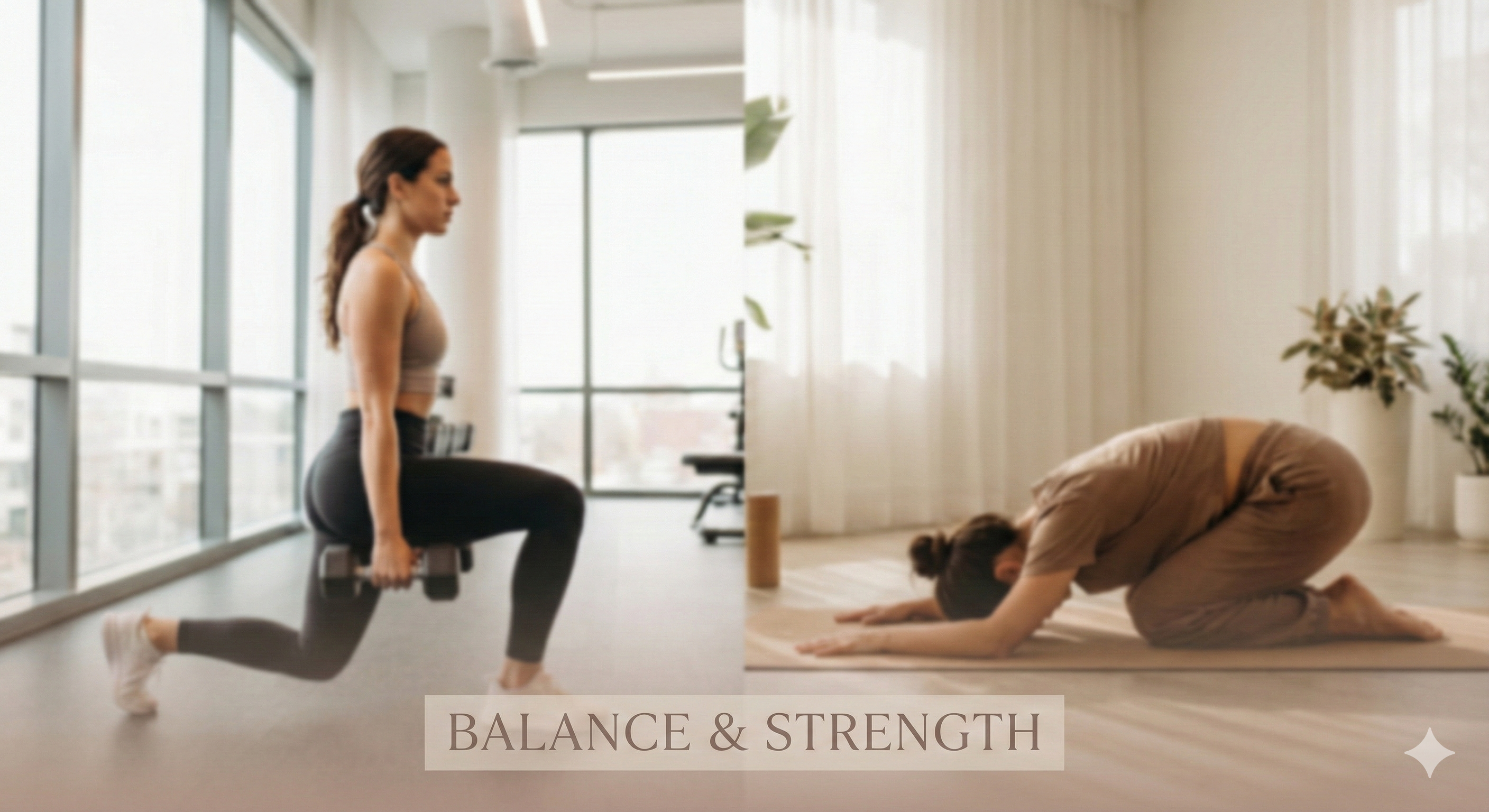
This is where cycle syncing your workouts comes in. It’s a revolutionary approach to fitness that goes beyond burning calories and builds a partnership with your body’s unique hormonal rhythm. It’s the definitive framework for turning confusing signals into a powerful wellness strategy, especially when you’re on a fertility journey.
What is Cycle Syncing? The Four-Phase Approach to Women’s Fitness
At its core, cycle syncing is the practice of aligning your fitness, nutrition, and even your work schedule with the four distinct phases of your menstrual cycle. Instead of pushing through a high-intensity workout when your body is craving rest, you learn to flow with your hormonal tides. This isn’t about being restrictive; it’s about being strategic and intuitive.
Your menstrual cycle is orchestrated by a complex dance of hormones, primarily:
- Follicle-Stimulating Hormone (FSH): Kicks things off by telling your ovaries to prepare an egg.
- Luteinizing Hormone (LH): Spikes dramatically to trigger ovulation—the very surge many at-home fertility tests look for.
- Estrogen: Dominates the first half of your cycle, boosting energy, mood, and muscle-building potential.
- Progesterone: Takes over after ovulation, preparing the body for potential pregnancy. It has a calming effect but can also lead to lower energy.
By understanding which hormones are in charge during each phase, you can choose workouts that complement your body’s natural state, reducing stress and enhancing its ability to function optimally. For anyone navigating the complexities of fertility, this shift from fighting your body to working *with* it can be a game-changer.
The Workout Rx: Syncing Your Fitness to Your Four Hormonal Phases
Let’s break down how to tailor your movement for each phase. Remember, the day ranges are averages—the key is to listen to your own body’s cues.
Phase 1: The Menstrual Phase (Approx. Days 1-5) – Rest & Recover
What’s happening: Your hormone levels are at their lowest point. Your body is shedding the uterine lining, which requires significant energy.
How you feel: Energy is typically low. You may feel more withdrawn, introspective, or experience cramping and fatigue.
Your workout plan: This is the time for gentle, restorative movement. Pushing too hard can increase inflammation and stress. Focus on:
- Restorative or yin yoga
- Gentle stretching and foam rolling
- Leisurely walks in nature
Why it matters for fertility: Honoring your need for rest reduces cortisol (the stress hormone), which can interfere with reproductive hormone production. Gentle movement also promotes blood flow to the pelvic region.
Phase 2: The Follicular Phase (Approx. Days 6-14) – Build & Energize
What’s happening: Estrogen begins its steady rise, rebuilding the uterine lining. Your body is preparing for ovulation.
How you feel: Energy and optimism are returning. You’ll likely feel more creative, outgoing, and physically capable.
Your workout plan: As estrogen climbs, so does your energy and pain tolerance. This is the perfect time to challenge yourself with more strenuous workouts. Think:
- High-Intensity Interval Training (HIIT)
- Running or spinning classes
- Dance cardio or kickboxing
Why it matters for fertility: Challenging workouts during this phase can improve insulin sensitivity, a crucial factor for hormonal balance and conditions like PCOS.
Phase 3: The Ovulatory Phase (Approx. Days 14-16) – Peak & Perform
What’s happening: Estrogen and LH hit their peak, triggering the release of an egg from the ovary.
How you feel: You’re at your peak. Energy is at its highest, and studies show you are physically strongest during this brief window.
Your workout plan: Capitalize on this surge of power! This is the time to go for a personal record or try the most challenging class of the week.
- Heavy strength training or CrossFit
- Intense circuit training
- Plyometrics (jump training)
Why it matters for fertility: Maximizing your physical output here is less about direct fertility benefits and more about leveraging your body’s peak state for overall strength and metabolic health, which are foundational to reproductive wellness.
Phase 4: The Luteal Phase (Approx. Days 17-28) – Power Down & Sustain
What’s happening: Progesterone rises, becoming the dominant hormone. If pregnancy doesn’t occur, both progesterone and estrogen will fall sharply at the end of this phase, triggering menstruation.
How you feel: This phase is a tale of two halves. In the beginning, you may still feel strong. As progesterone peaks and then falls, you may experience PMS symptoms, fatigue, and a desire to slow down.
Your workout plan: Adjust your intensity as the phase progresses. In the first half, focus on moderate-intensity activities. In the second half, as your period approaches, scale back significantly.
- Early Luteal: Moderate-intensity strength training, Pilates, swimming.
- Late Luteal: Vinyasa yoga, bodyweight exercises, hiking, or longer walks.
Why it matters for fertility: Over-exercising in the late luteal phase can create a stress response, potentially disrupting the delicate progesterone balance needed to support implantation and a healthy uterine lining.
Beyond the Textbook: How Syncing Helps When Your Data is “Messy”
This is where cycle syncing truly shines. What if your cycle is 40 days long? What if you don’t get a clear LH surge? For women with PCOS, irregular cycles, or those in perimenopause, the standard 28-day model is useless.
Cycle syncing teaches you to listen to *qualitative* data—your energy levels, mood, sleep quality, and physical symptoms—not just the quantitative data from a test strip. It becomes a tool for self-attunement.
- Feeling sluggish and crampy? Treat it as a Menstrual Phase, regardless of what the calendar says. Rest and recover.
- Feeling a sudden burst of energy and confidence? Lean into it with a Follicular/Ovulatory-style workout.
- Feeling bloated and irritable? That’s your cue to enter a Luteal-style wind-down.
This approach gives you an actionable way to support your body in the present moment. It helps lower systemic stress, which is a known disruptor of the HPA (Hypothalamic-Pituitary-Adrenal) axis—the command center for your reproductive hormones. It gives you a sense of control and a way to actively participate in your wellness while you and your doctor investigate the root cause of any irregularities.
Getting Started with Cycle Syncing: A Practical 3-Step Guide
- Track Your Bio-Feedback: Use an app to track your period, but go deeper. Each day, jot down your energy level (1-10), mood, and any physical symptoms (cramps, cravings, etc.). This becomes your personal data map.
- Map Your Movement: Based on your notes, start gently aligning your planned workouts with your perceived phase. Don’t aim for perfection, aim for awareness.
- Listen and Adapt: This is not a rigid dogma. If you planned a HIIT session but wake up feeling exhausted, listen to that signal. Swap it for a walk or yoga. The ultimate goal is to build trust with your body. [
Your Empowering Action Plan Awaits
The journey to understand your hormones can feel overwhelming, especially when the data you collect leaves you with more questions than answers. It’s easy to feel powerless while waiting for the next doctor’s appointment or the next cycle to begin.
Cycle syncing your workouts is your definitive action plan. It’s the answer to the “So what now?” It’s how you transform confusing feedback from your body into a daily practice of support and empowerment. By learning to listen to your unique rhythm, you move beyond the frustrating limitations of textbook charts and into a deeper, more effective partnership with your own body. Start today—not by forcing a new routine, but by listening to what your body is asking for, one workout at a time.